Forge v0.1.0 · MIT · 127.0.0.1
GitHub

open source · MIT · runs on your machine

Where ideas are shaped into software.

A visual dashboard for your coding agents. Start a task from a pull request or a ticket, watch its terminal, know when it needs you, and see what it costs, on Claude Code, Codex, Pi or OpenCode.

live demo — type or paste anything

RReview Start

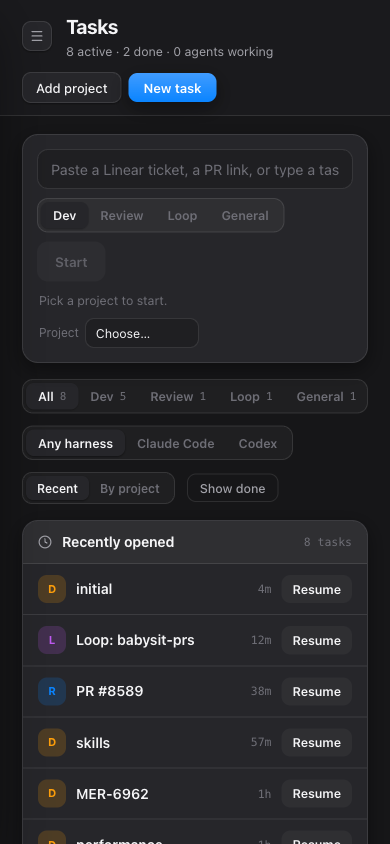
Pull request detected — this becomes a review on triton, run by Codex.

try
npx forge-cw
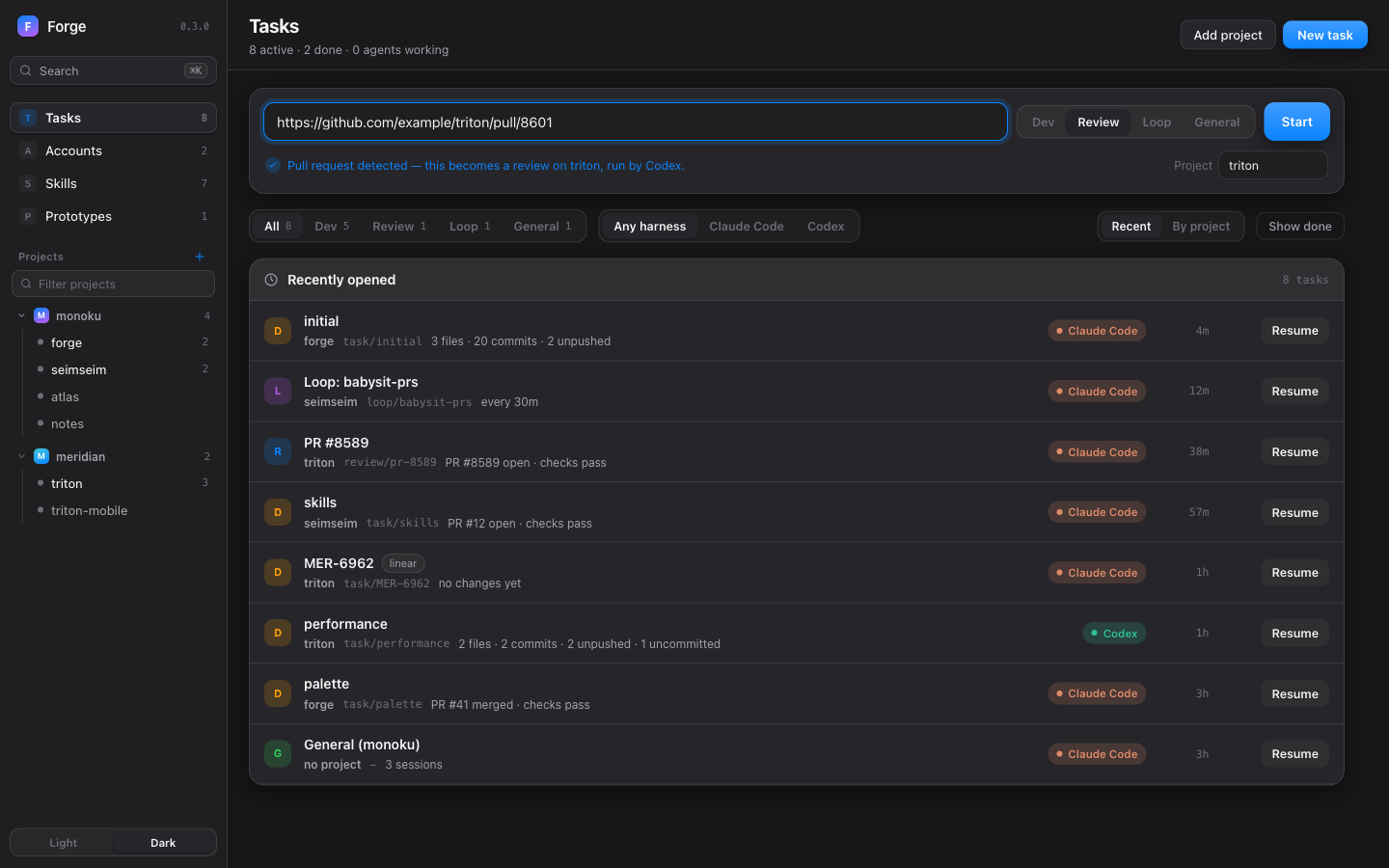
The Forge task list: a start card with a pasted pull request, filters, and eight recent tasks with their harness and elapsed time.
runs on Claude Code Codex Pi OpenCode

Five agents. Five terminals. Three accounts. Which one is still running, and what did it push?

Forge puts them in one place.

01

Start from anything.

Paste a pull request, a Linear or Notion link, or type a name. Forge picks review or dev and starts it on the right project and harness.

Pull request → Review MER-6962 → Dev Notion → Dev
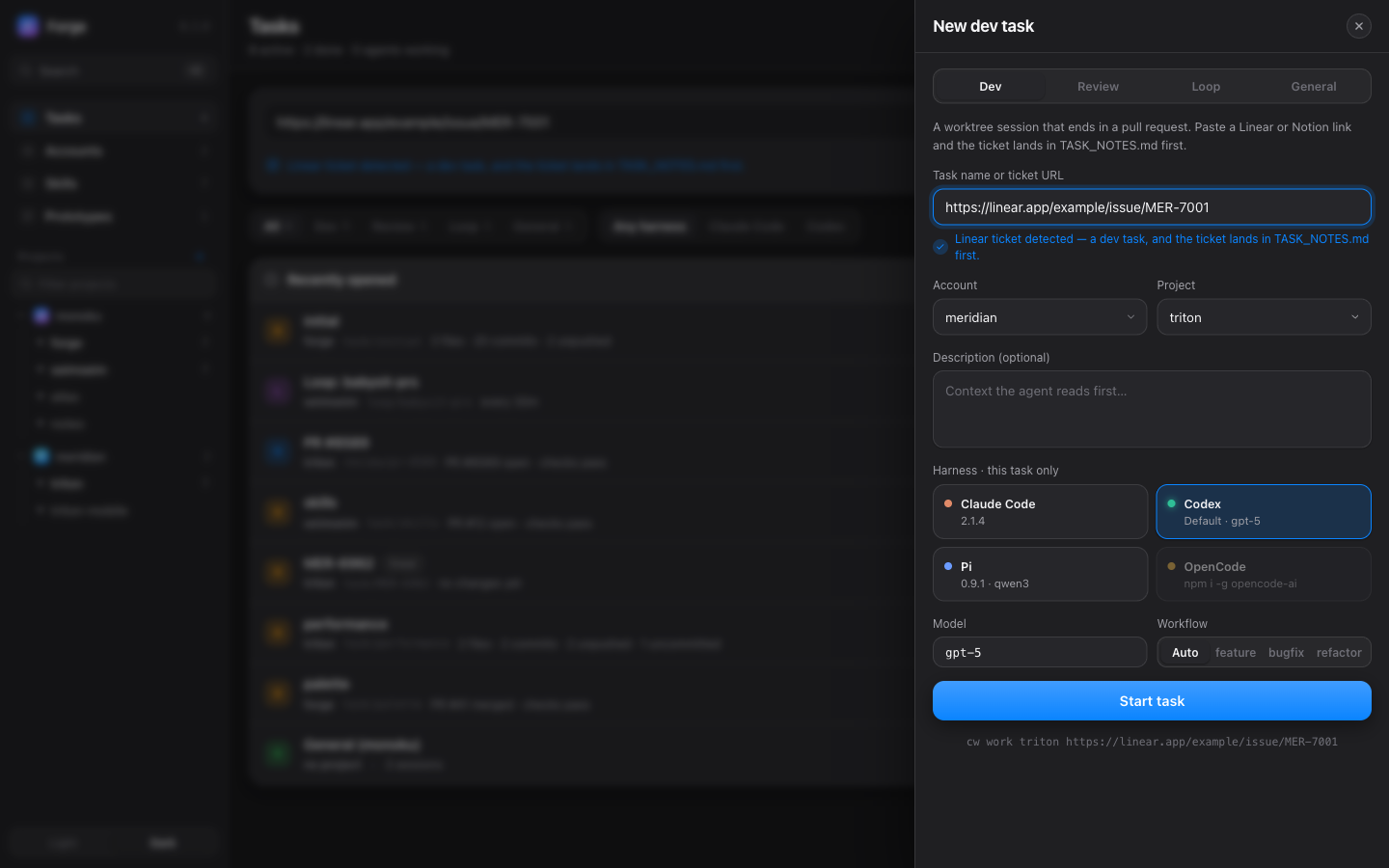
The new task drawer: type, harness, model and workflow pickers with the exact cw command shown before starting.
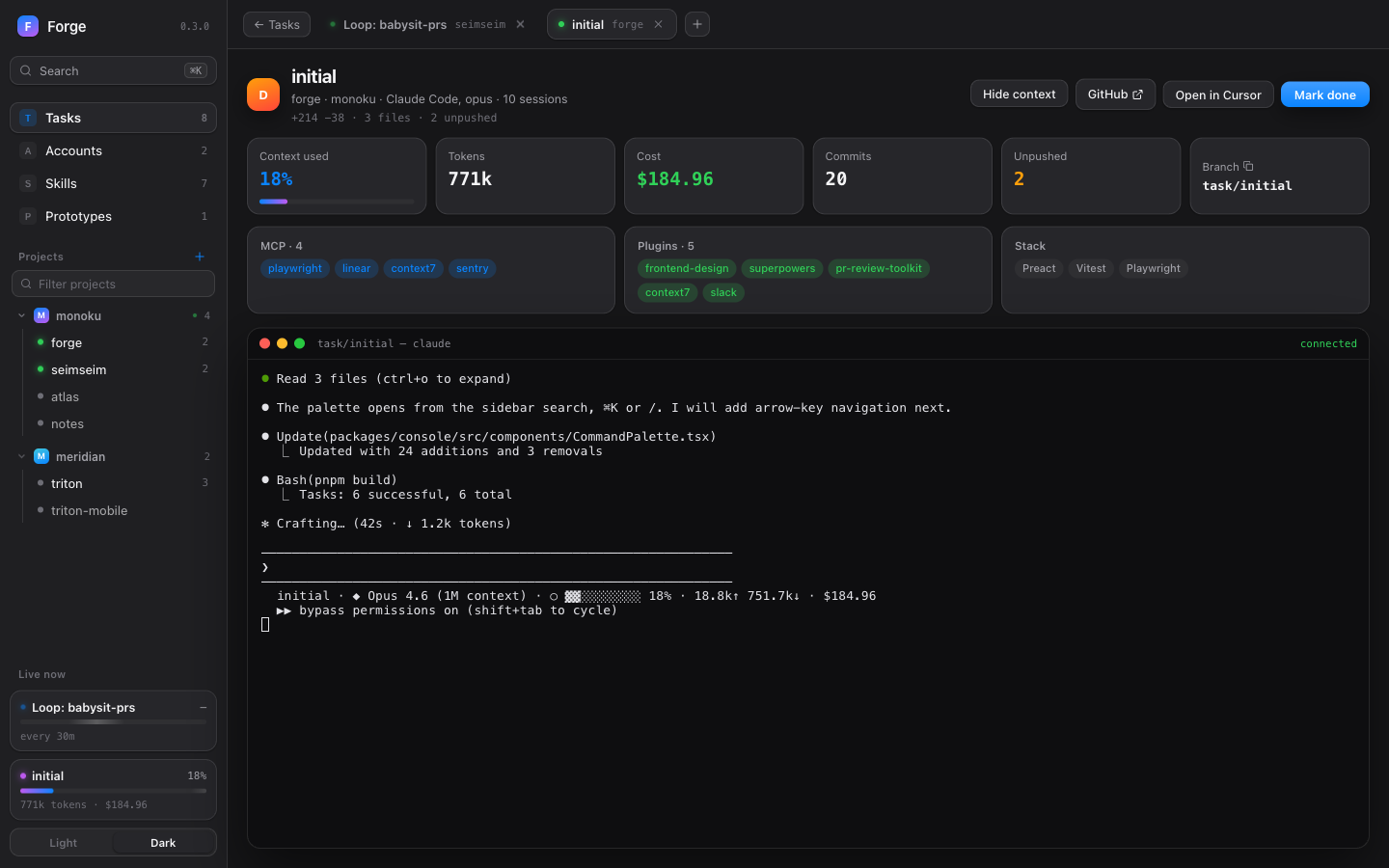
Task detail: the agent's terminal with context, tokens and cost, commits, unpushed work and the pull request.
02

The agent's terminal, in the browser.

Context used, tokens and cost from its status line, plus commits, unpushed work, the pull request and its checks. Open the worktree in VS Code, Cursor, Windsurf or Zed. Done asks first when closing a task would lose work.

03

Know which agent needs you.

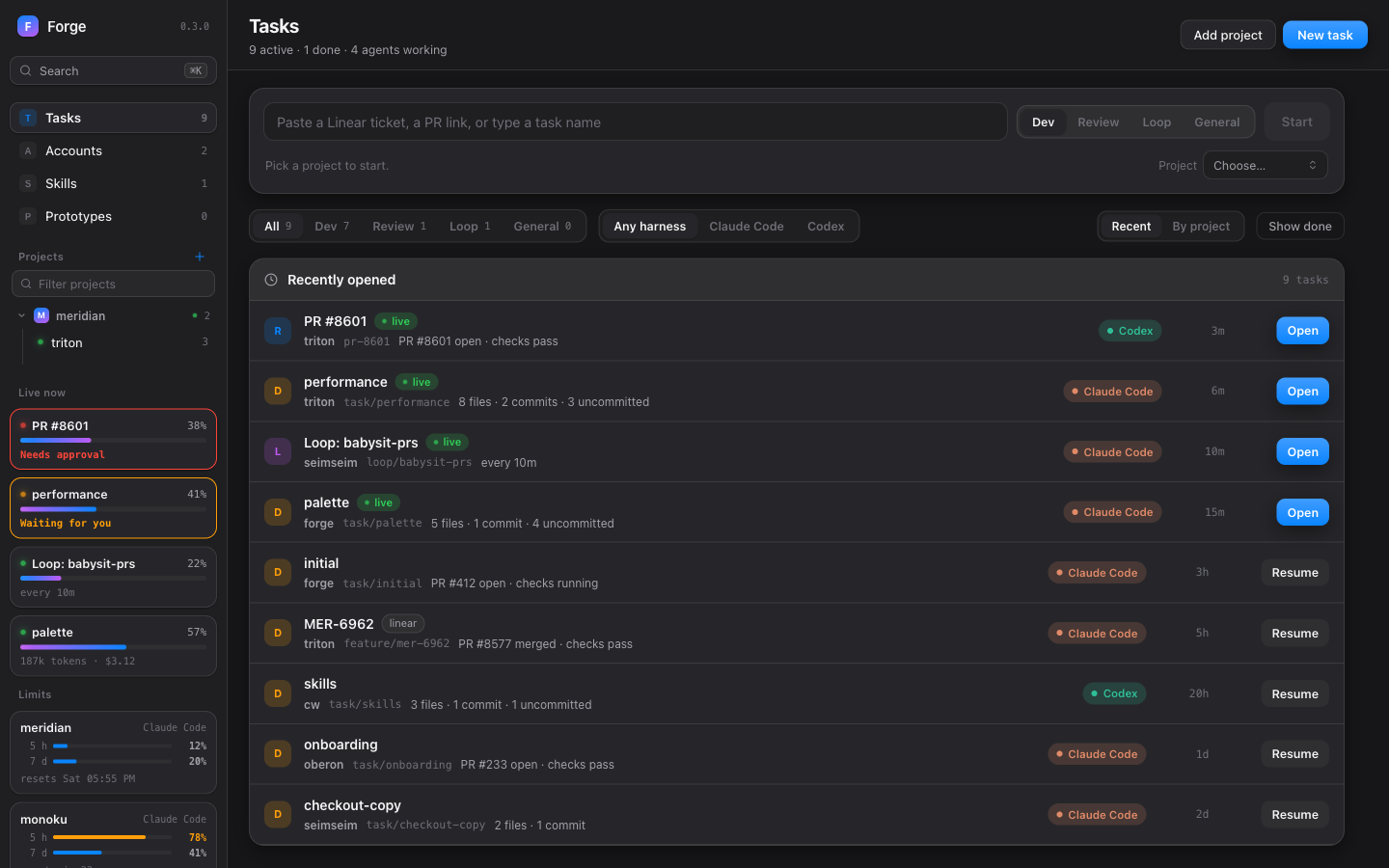
Forge reads each live terminal and tells you whether the agent is working, waiting for you, asking for approval or stopped on an error. Sessions that need you move to the top, the page title counts them, and a browser notification can tell you when you're looking elsewhere.

Working Waiting for you Needs approval
The task list with four live sessions in the sidebar: a review that needs approval and a task waiting for you at the top, two working below, and each account's usage limits.
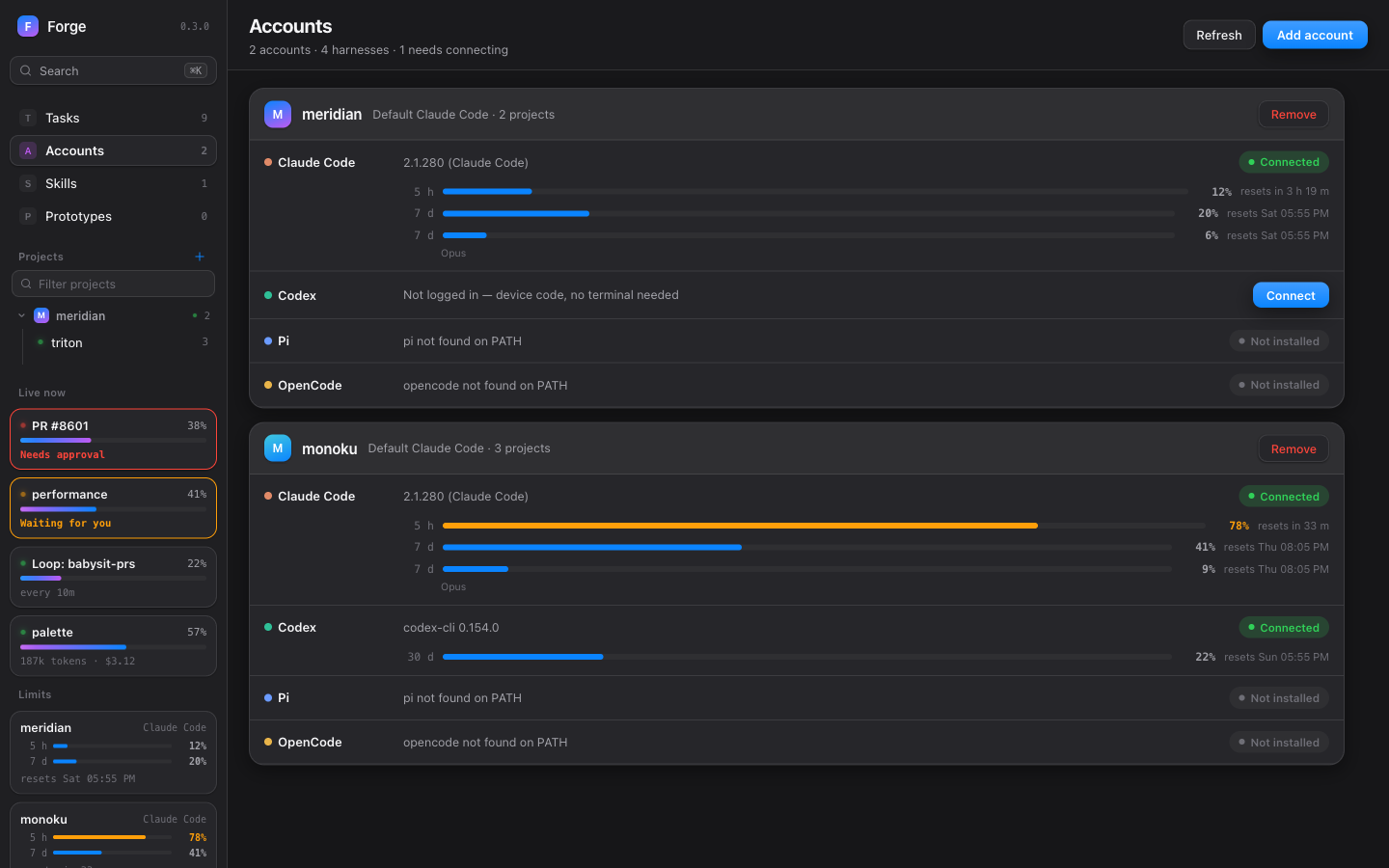
The accounts screen: each harness per account as connected, not installed or a Connect button, with its 5-hour, weekly and monthly usage windows and when they reset.
04

Every harness, every account.

One card per account with each harness's status and one-click Connect. Codex logs in with a device code, no terminal. See each account's usage limits, the 5-hour and weekly windows, and when they reset, before a session runs out.

05

Keyboard first.

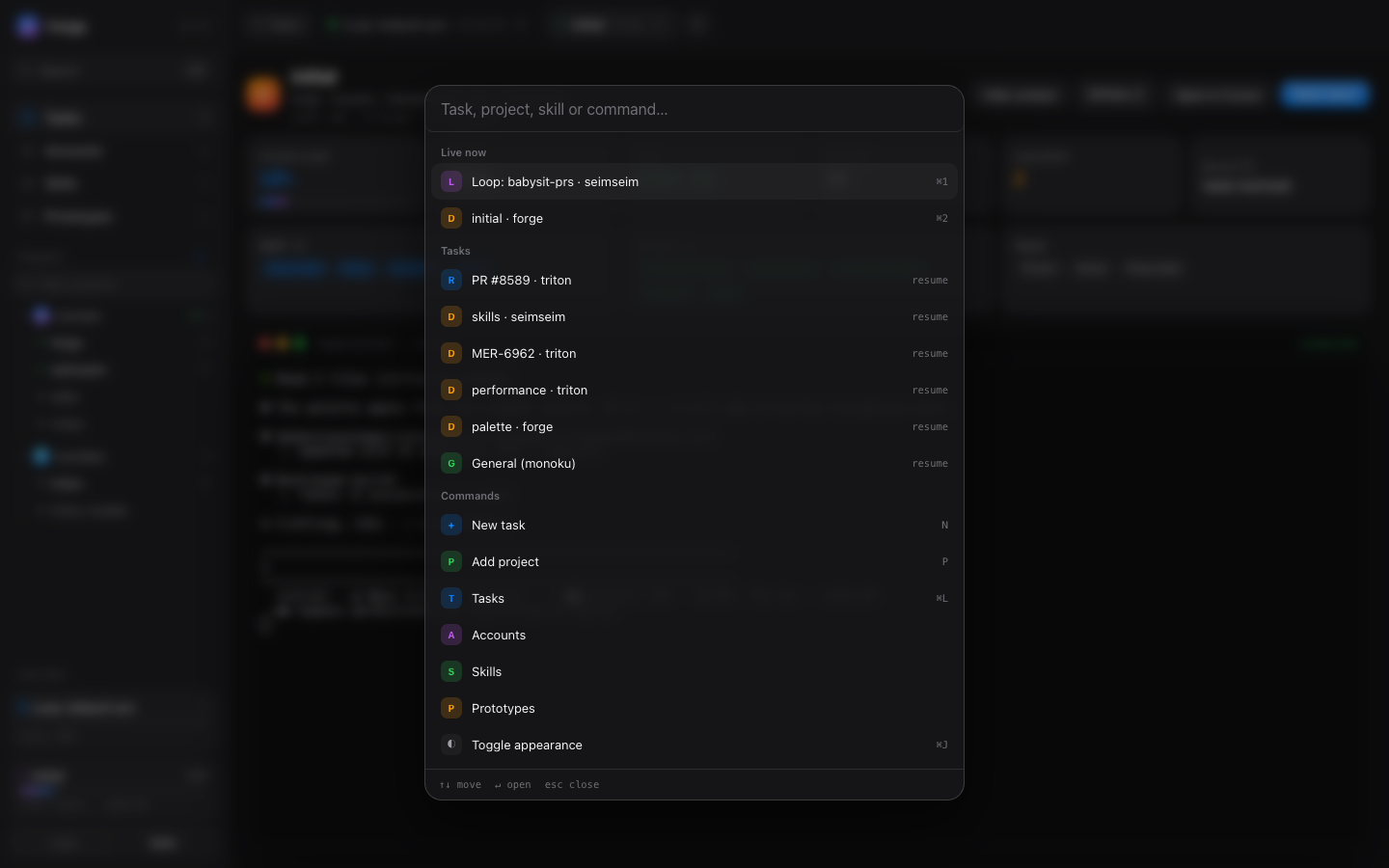
A palette for sessions, tasks, projects and commands.

⌘K Command palette
N New task · P Add a project
⌘J Light and dark · ⌘1–5 Tabs
The command palette open over the task list, listing live sessions, tasks, projects and commands.

Multi-tab sessions

Keep several agents open; tabs stay connected while you browse.

Skills

Browse and edit global, account and project skills, install from skills.sh, and see what your Claude Code plugins bring. Propose a skill and an agent opens the pull request.

Prototypes

Create or pull a Liveframe frame and Forge opens an agent in it. Push it back with one click.

Projects

Create, register, move and delete projects from the dashboard.

Light and dark

System fonts, reduced-motion aware, works in narrow windows.

Live sessions

A sidebar card per running agent with its state and context meter; the ones that need you go first.

Forge in a narrow window: the sidebar becomes an overlay and the task list fills the screen.

Local by default, and it folds.

Forge listens on 127.0.0.1 and only answers requests from your own machine: its API starts agents, logs accounts in and can delete project files. A page on another site can't call it, and neither can another computer on your network.

Same-machine check on · no authentication needed
FORGE_HOST=0.0.0.0 opens it to your network — trusted networks only
Team mode adds PostgreSQL and a bearer token

How it works

Forge consoleIn your browser
Forge serverOn your machine · HTTP and WebSocket
CWWorktrees, sessions, accounts
Claude Code Codex Pi OpenCode

Underneath runs CW (Coding Workspace), an open-source command line tool that Forge installs for you: it gives every task its own git worktree and starts the agent on the account and harness you picked. You can use it from a terminal too.

Learn about CW →

Get started

macOS or Linux, with Node 22.13+, Python 3.9+, bash 4+ (brew install bash on macOS), git, and one harness.

1

Run Forge

npx forge-cw

Sets up what it needs the first time and opens http://localhost:3000. To keep it around: npm i -g forge-cw, then forge.

2

Connect an account

Open Accounts, add one and connect Claude Code, Codex, Pi or OpenCode. Codex logs in with a device code, no terminal.

3

Add a project

Add a repository from the sidebar, or create a new one, and start your first task from the start card.

Give your agents
a home.

console ~130kb gzippedhono + preactxterm.js terminalssqlite local, postgresql for teams